
What AI Is Already Doing in Accounting
AI is already doing wonders in accounting. According to a survey AI is used by accounting teams across industries, for purposes such as bookkeeping, tax preparation and financial audits. The “big four” public accounting firms — Deloitte, EY, PwC and KPMG — have already tapped into AI to transform their financial audit processes and internal workflows, such as managing audit reviews and approvals. Internal accounting and audit teams at companies of all sizes are beginning to follow suit or will be soon. For instance, auditors can eliminate transaction sampling and the risks associated with that traditional practice, because AI can quickly analyze an entire accounting data set. In another example, accountants are enhancing the audit process by using AI to identify unusual or anomalous transactions as part of planning and risk assessment stages, rather than uncovering them as part of field work. Meanwhile, smaller accounting firms are ramping up more slowly, using AI for research, tax-return preparation and bookkeeping services, but they’re expected to accelerate their pace. What can AI do?- AI as a Capable Assistant/Adviser AI is extremely capable of being an assistant and an advisor with its unmatchable qualities like efficiency, routine tasks and analysis. AI can also prove to be extremely efficient with being an advisor by forecasting and giving it scenarios.
- AI as a Competitive Differentiator According to Forbes ‘Artificial intelligence acts as a competitive differentiator by fundamentally shifting how companies manage data, execute operations, and scale value without proportional cost increases.” Organizations can leverage machine learning to anticipate market shifts, consumer behavior, and supply chain bottlenecks before competitors react. AI can also rank and deliver real-time, context-aware recommendations and services tailored to individual user habits, driving customer retention and higher return on investment.
- Real-Time Data Analysis AI is two times more efficient at ANALYSIS and pattern recognition than humans. It gives real time ANALYSES, predictions and pattern recognition.
challenges
While AI proves to be extremely efficient and beneficial, it can also come with a lot of disadvantages and disappointments. The biggest concern about artificial intelligence is its skill gaps and training staff. According to a thomson reuters report AI training availability is less in accountability compared to other fields which makes being responsible for artificial intelligence difficult and comes with a lot of risks.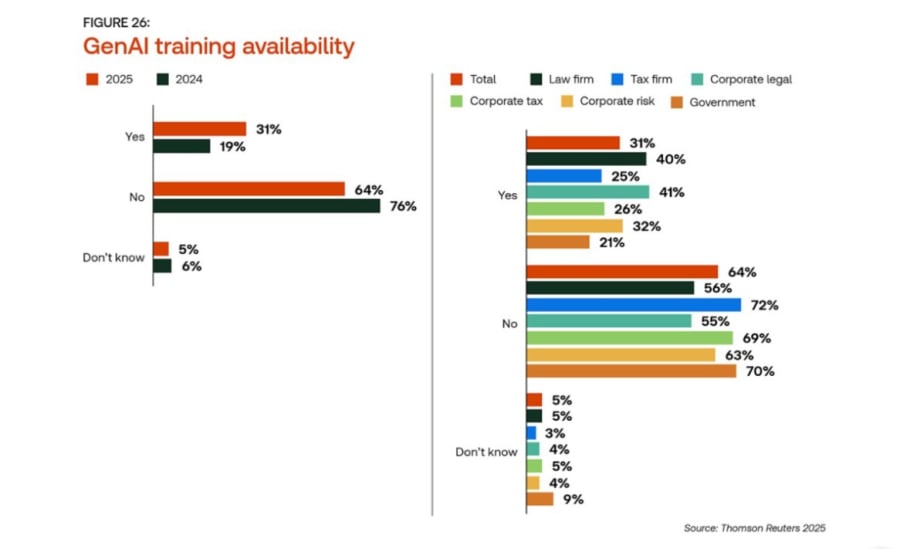
Overcoming the challenges
There are a lot of ways to overcome the challenges that use of artificial intelligence professionally comes with. First of all firms should train their staff properly on the use of AI and remove a heavy reliance on the software because at the end of the day AI is just a tool not the replacement . If staff is provided with the basic training and information most of the challenges will be easier to overcome. Secondly firms should use artificial intelligence softwares that can be trusted not to leak data of the clients. Damage of trust of a client will always be the greatest loss a company can get.What U.S. Accounting Firms Are Actually Saying
US accounting firms view artificial intelligence as a powerful tool to automate routine work, boost productivity, and shift focus toward high-value advisory services. Industry surveys show high optimism and widespread adoption, though firms emphasize that human oversight remains essential for accuracy and trust. Organizations like CPA.com actively guide CPAs on safe implementation.Views and SentimentHigh Optimism: Around 68% of tax and accounting professionals express excitement or hope regarding generative AI.Not a Replacement: Firms agree that AI clears routine workloads rather than replacing the accountant's core role.Gated Trust: Most firms require human approval before any automated output, communication, or filing goes out.The Case for AI Replacing Accountants
At the end of the way AI can not replace accountants, it's just a tool used to make accountants more efficient. Accountants just need to adapt and to learn to use this software for their own good and understand that not all tasks are meant for AI. AI is merely an efficient tool not a replacement. The Biggest Question: What Happens to Entry-Level Accountants? Artificial intelligence is replacing repetitive entry-level accounting tasks like data entry, invoice capture, and basic reconciliations. Instead of eliminating junior roles, AI is shifting expectations so that new hires focus on analysis, review, and strategic interpretation much earlier in their careers.A Practical Framework: Deciding What to Delegate to AI
The debate about whether AI replaces accountants is largely settled in practice — it does not, and the firms actually using it are not trying to make it. What remains genuinely unresolved is where the boundary sits inside a working practice. The useful question is not "should we use AI" but "which specific tasks can leave a human's desk."
The four tests below are a reasonable filter. A task is a candidate for automation if it passes all four.
| Test | Question to ask | Fails the test when... |
|---|---|---|
| Is it repetitive? | Does the same task recur many times with the same shape? | Every instance is unusual, so there is no pattern to learn |
| Is it verifiable? | Can a reviewer confirm the output is correct without redoing the work? | Checking the answer costs as much as producing it |
| Is the cost of error low? | If it is wrong, does it get caught before it matters? | An error reaches a filing, an audit opinion, or a client's tax position |
| Is it free of professional judgment? | Is there one defensible answer, rather than a choice between positions? | The task requires interpreting the law or weighing a client's circumstances |
Applying that filter, most practices will find that document intake, transaction matching, and consistency checking pass all four and can be automated with confidence. Audit planning, tax position selection, and anything that goes out over a signature fail on the last two tests and should not be. That division is not a temporary state of affairs pending better models — it follows from the fact that professional responsibility cannot be delegated to software.
What this means for people entering the profession
The realistic concern raised by AI in accounting is not that the profession disappears, but that the traditional entry route changes. The junior tasks that used to teach a new accountant how a business's numbers behave — entering data, tying out accounts, chasing discrepancies — are precisely the tasks being automated.
That shifts the burden onto training. If a graduate never categorises a transaction by hand, they never build the intuition that lets them recognise when a categorisation is wrong. Firms that automate the entry-level work without replacing the learning it provided will find they have reviewers who can operate a tool but cannot spot when it is mistaken. The practical response is deliberate exposure: have juniors review the automation's output and explain the exceptions, which preserves the learning while removing the drudgery.
Where the Profession Is Heading
The direction of travel across US firms is fairly consistent, and it is more modest than the headlines suggest. AI is absorbing routine workload, firms remain optimistic about it, and human approval is still required before automated output goes out. The accountant's role is shifting toward review, exception handling and advisory work rather than disappearing.
What that means in practice is that the skills that will matter are the ones AI is worst at: interpreting an ambiguous set of facts, deciding between defensible positions, explaining a conclusion to a client who is worried, and taking responsibility for the answer. Those were always the skills that distinguished a good accountant from a competent one. AI has not changed what they are — it has removed the routine work that used to sit in front of them.