It is important to know in your business where you are, where you want to be, and what changes you need to make to get there. Adapting is not optional — it is how businesses survive.
If you are a small business owner or a freelancer, you have probably already felt the problem with manual bookkeeping. Repeated mistakes. Things piling up. Numbers that do not make sense. And the worst part — you cannot even answer basic questions about your own money.
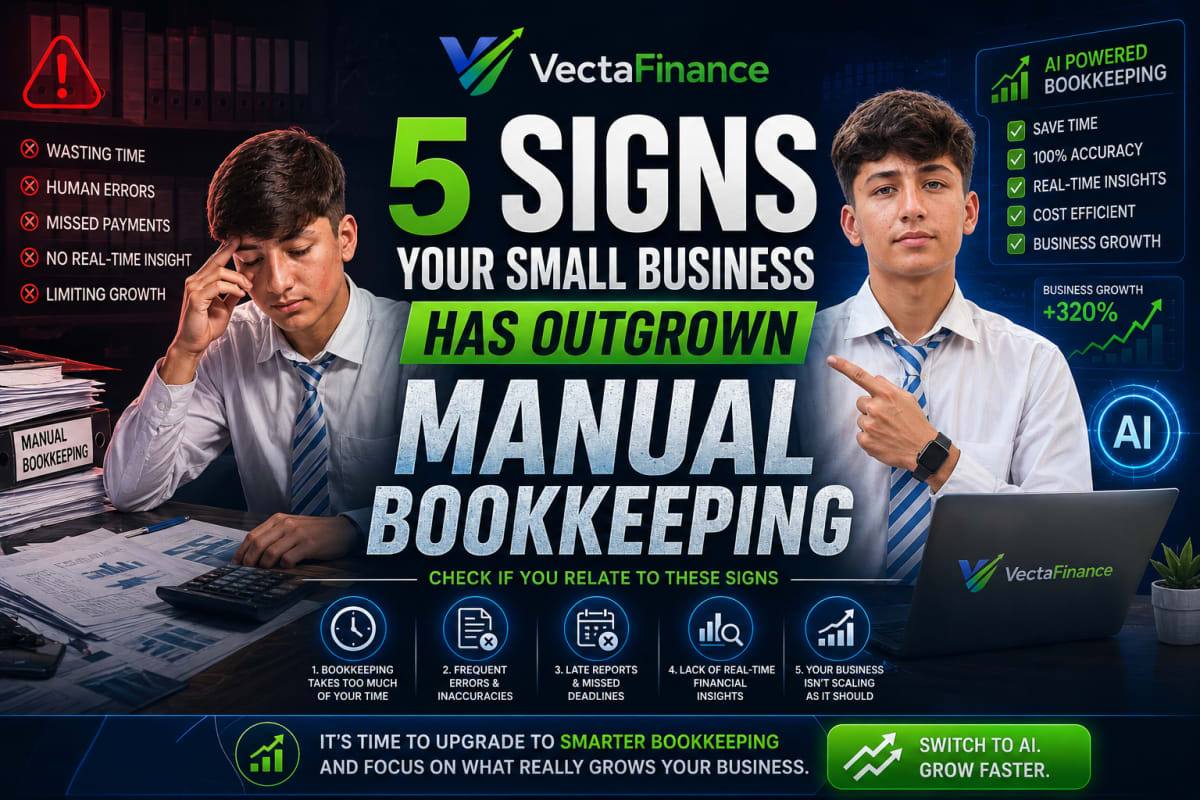
Here are 5 signs that you have already crossed the line.
Sign 1 — You Dread the End of Every Month
The moment the month ends, the stress begins. Bills to pay, deadlines to meet, targets to review. But instead of spending that time on your actual business, you are sitting with a spreadsheet trying to make sense of numbers you have been putting off all month.
That dread is not a personality problem. It is not laziness. It is a signal that the system you are using is creating more friction than it should.
Sign 2 — You Have Made the Same Mistake More Than Once
You miscategorised something. Your accountant caught it and fixed it. Three months later you made the exact same mistake again.
This is not carelessness. This is what happens when humans do repetitive tasks. We get tired, we rush, we make the same errors over and over. A machine doing the same task makes the error once — and learns from it. By month three of using AI bookkeeping software, the categorisation accuracy is above 95%. A human doing the same work manually stays at roughly the same error rate forever.
The problem is not you. The problem is the tool.
Sign 3 — Your Accountant Fixes Your Records Instead of Advising You
You are paying your accountant good money. But instead of telling you how to grow your business or reduce your tax bill, they spend half your meeting cleaning up messy records and correcting miscategorised transactions.
That is expensive time being wasted on work that software can do automatically. Your accountant should be sitting across from you saying — here is how to structure your expenses to reduce tax, here is where your margins are weakest, here is what the numbers are telling us about next quarter.
If that is not what your accounting meetings look like, the problem is usually the quality of the data going in — not the accountant.
Sign 4 — You Cannot Answer Basic Questions About Your Own Money
Someone asks you — what was your profit last month? How much did you make in sales? Which software are you spending the most on? What was your biggest expense this quarter?
And you do not know. Not off the top of your head. You have to dig through a massive spreadsheet to find an answer that should be immediately obvious to any business owner.
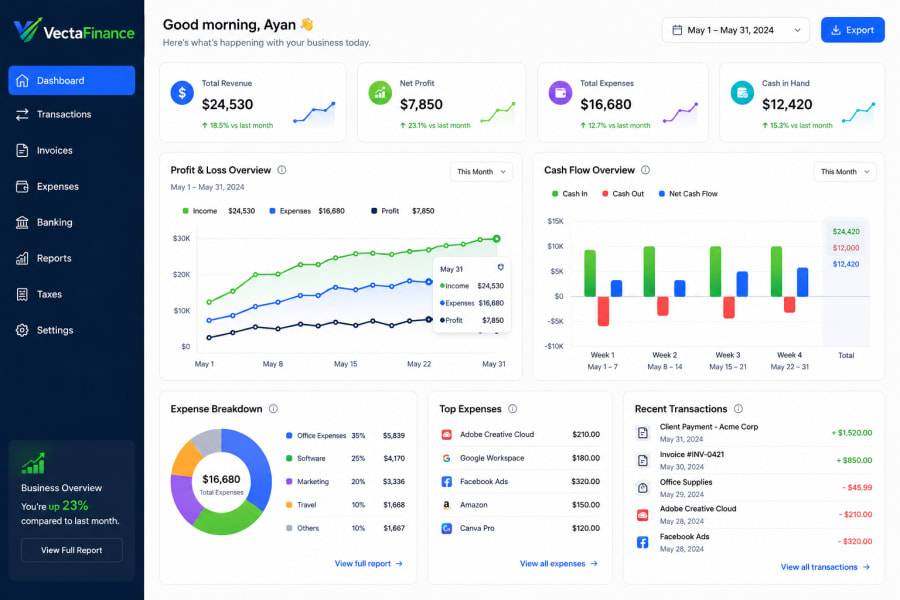
Your own finances should not be a mystery to you. When your books are handled by AI software, your profit and loss, cash flow, and expense breakdown are updated in real time. You open the app and the answer is right there — no digging, no calculating, no guessing.
Sign 5 — Bookkeeping Takes More Than 2 Hours a Month
This is the simplest sign of all. Time your bookkeeping this month. Actually sit down and track how long it takes — the data entry, the reconciliation, the fixing of errors, the time spent looking for receipts, all of it.
If that number is above 2 hours, AI bookkeeping software can do that same work automatically while you sleep, while you focus on customers, while you do anything else that actually moves your business forward.
Two hours of your time every month is worth more than the cost of the software replacing it. A business owner billing at even $30 per hour is spending $60 worth of their time on work that Xero Starter costs $15 per month to automate.
So What Do You Do If You Recognised Yourself?
Check yourself honestly against these five signs. If you recognised yourself in two or more of them, manual bookkeeping is already costing you — in time, in mistakes, and in the mental load of managing something that should be running quietly in the background.
The good news is that switching is not complicated. Most AI bookkeeping platforms take under an hour to set up, connect directly to your bank account, and start categorising transactions automatically from day one.
The choice to switch is yours. But now at least you know where the line is — and whether you have already crossed it.
Try Xero Free for 30 Days
The easiest starting point for small businesses and freelancers. No credit card required. Most users see their first automated reconciliation within 24 hours of connecting their bank account.
Not sure which AI bookkeeping software is right for your business? Read our full breakdown: What Is AI Bookkeeping and How Does It Work in 2026 — it covers exactly how the technology works and what to expect in the first 60 days.
Frequently Asked Questions
Ready to try VectaFinance yourself?
Upload any bank CSV, Stripe, QuickBooks, or Xero export and receive a professional financial report with clear insights — usually within 24 hours.
Create Free Account & Test NowNo credit card required • 2 free reports every month • Cancel anytime